Wall Art Styling
In an Open Room, Wall Art Has to Pick a Side
A practical Orange Palm Gallery journal on using calm Florida inspired wall art to define an open plan living or dining area without adding visual clutter.
July 29, 2026 / 4 min read / Orange Palm Gallery Studio
Source note: this guide is written and maintained by Orange Palm Gallery Studio. Last updated July 29, 2026.
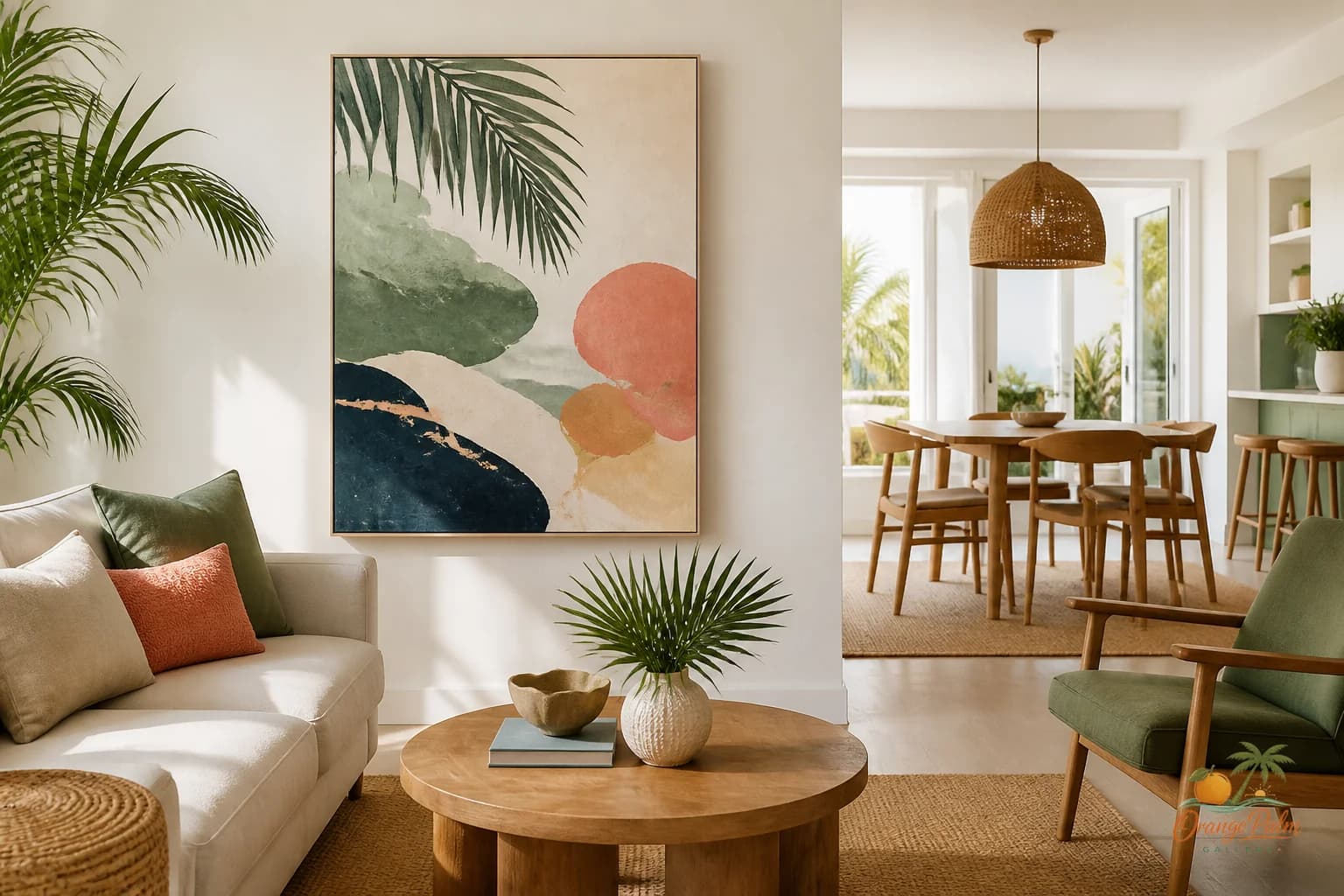
Open plan rooms make people greedy with wall art.
There is a living area, a dining corner, maybe a desk tucked against the same stretch of wall. Then comes the instinct to decorate every blank patch so the room feels finished. That is usually where the space starts to look busy, even when every individual piece is quiet.
The better move is more opinionated: make the art belong to one zone.
Not the whole room. Not the largest wall by default. One zone.
A piece of Florida inspired wall art can do real interior work in an open plan space. It can tell the eye, “this is the sitting area,” or “this is where the dining table lives.” It can warm up a pale wall without turning the room into a sample board of every coastal thing you like.
The tradeoff is that you have to let some walls stay plain.
That sounds easy until you are standing in the room with a tape measure, looking at a blank white rectangle between a sofa and a breakfast table. The temptation is to split the difference. Center the art between everything. Make it fair.
Fair is rarely beautiful.
The wall is not the anchor. The furniture is.
People often center wall art on the wall because the wall feels permanent. But in an open plan room, the furniture is what creates the zones. The sofa, dining table, console, or reading chair is the thing the art should answer to.
If the piece is for the sitting area, align it with the sofa or the main chair grouping. Let it sit over that zone with enough breathing room around it. If the piece is for the dining area, relate it to the table, sideboard, or pendant light. Do not ask one artwork to visually serve three different areas unless the room is very spare and the scale is generous.
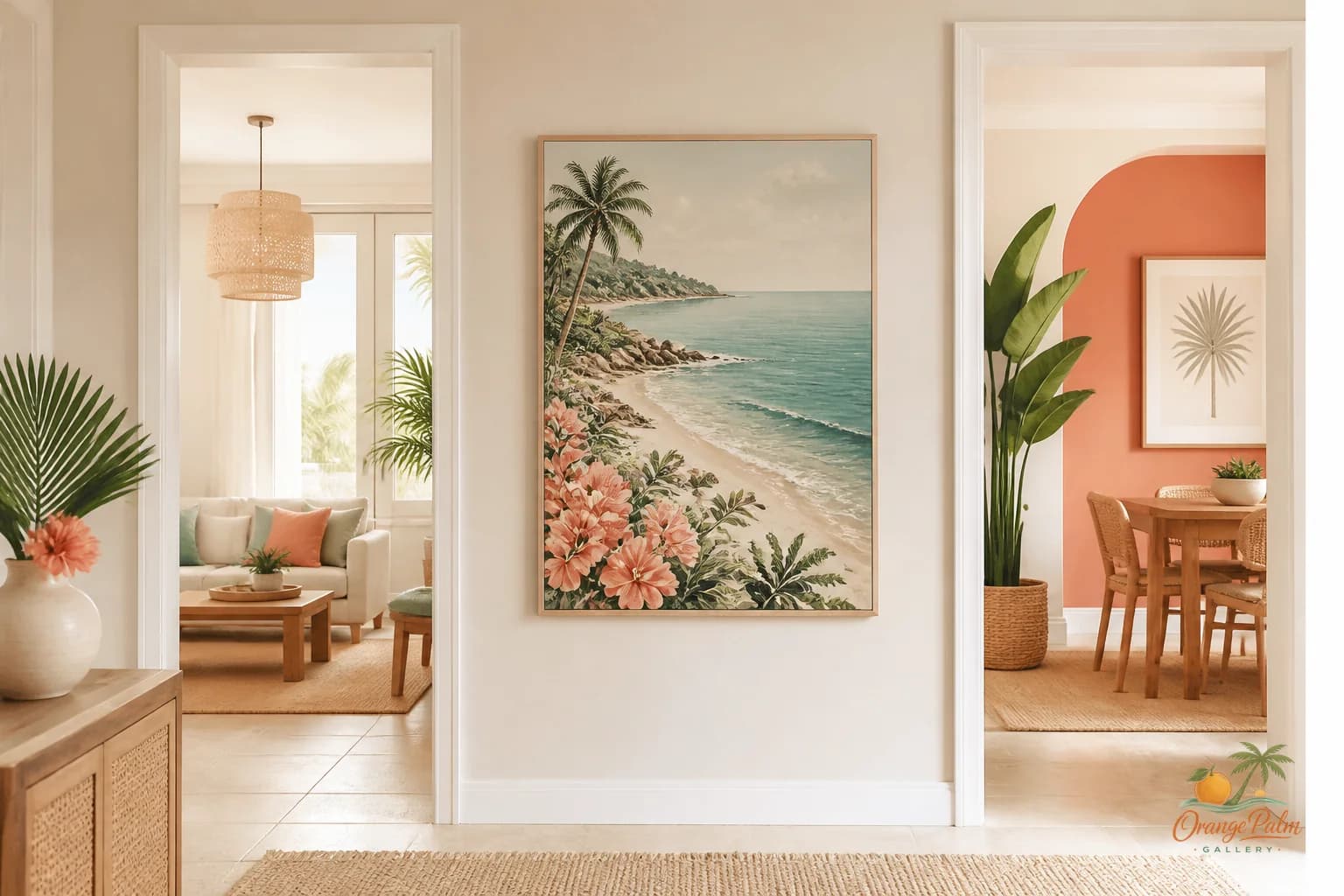
This is where a calm coastal palette helps. A soft palm green, warm sand, washed coral, or inky botanical shape can mark the zone without shouting across the room. The color should feel like a small temperature shift, not a theme announcement.
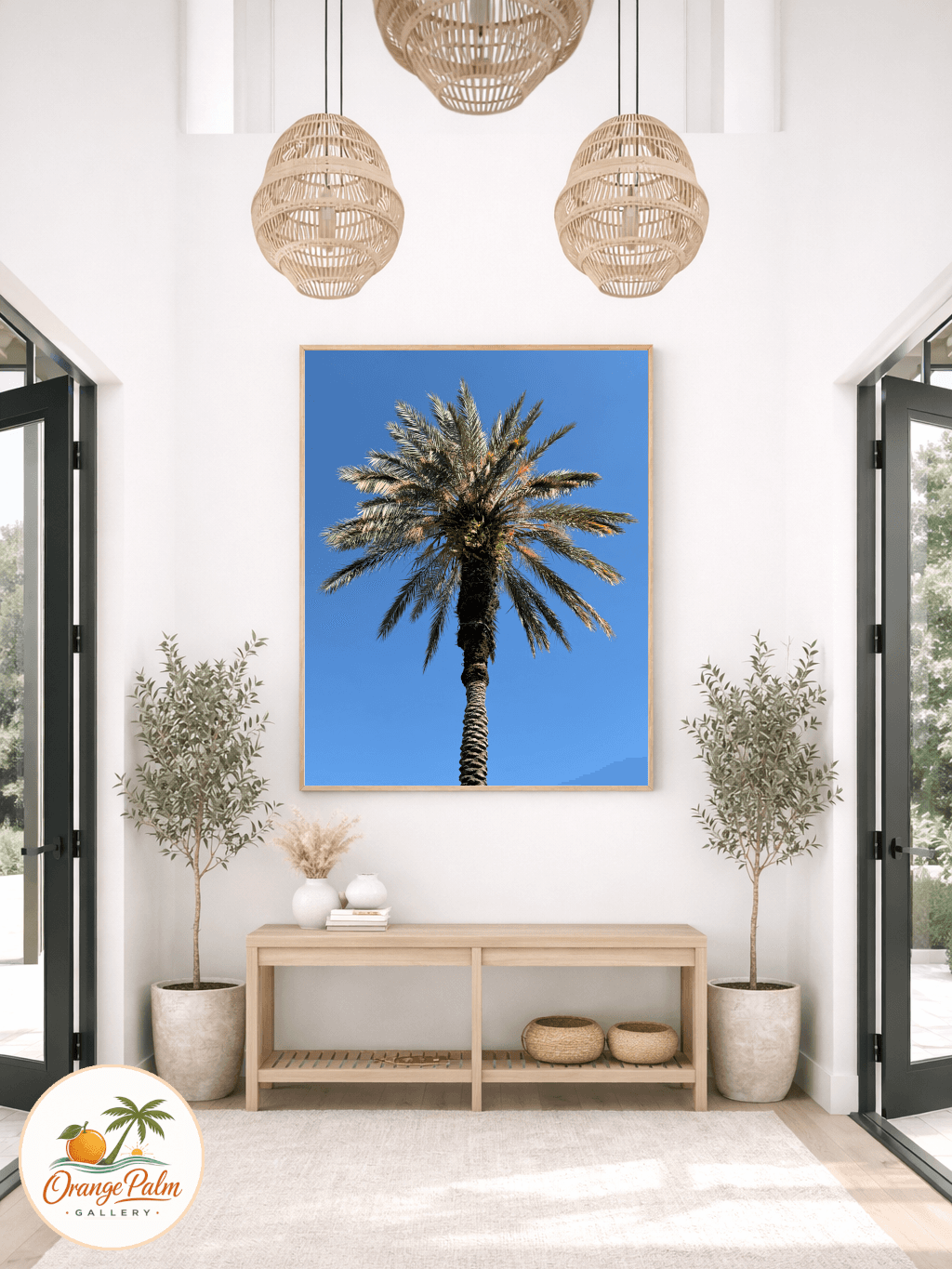
In a Florida inspired room, that might mean a piece with sun faded warmth, a quiet palm shape, or a clean coastal composition that hints at water and foliage without becoming souvenir decor. The room gets atmosphere. It does not get a costume.
Let the art create a visual stop
Open rooms need places for the eye to land. Without them, everything runs together: sofa into rug, rug into table, table into kitchen, kitchen into hallway.
Wall art can create a stop.
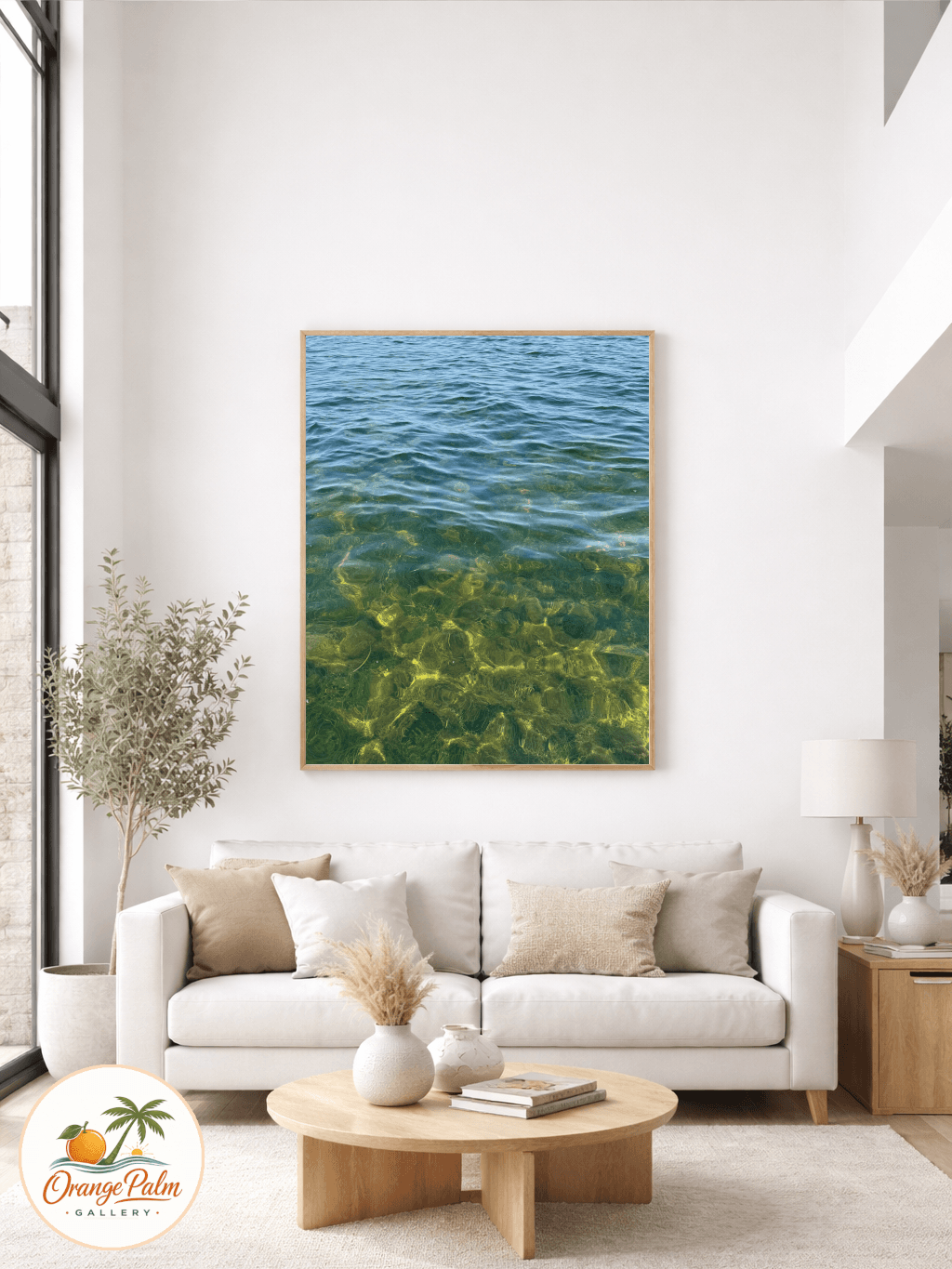
A single piece above the sitting area gives the eye a soft landing before it moves elsewhere. The best placement often feels slightly lower than people expect because it is relating to the furniture, not floating above the room like a label. If it hangs too high, it stops belonging to the zone and starts feeling like an afterthought.
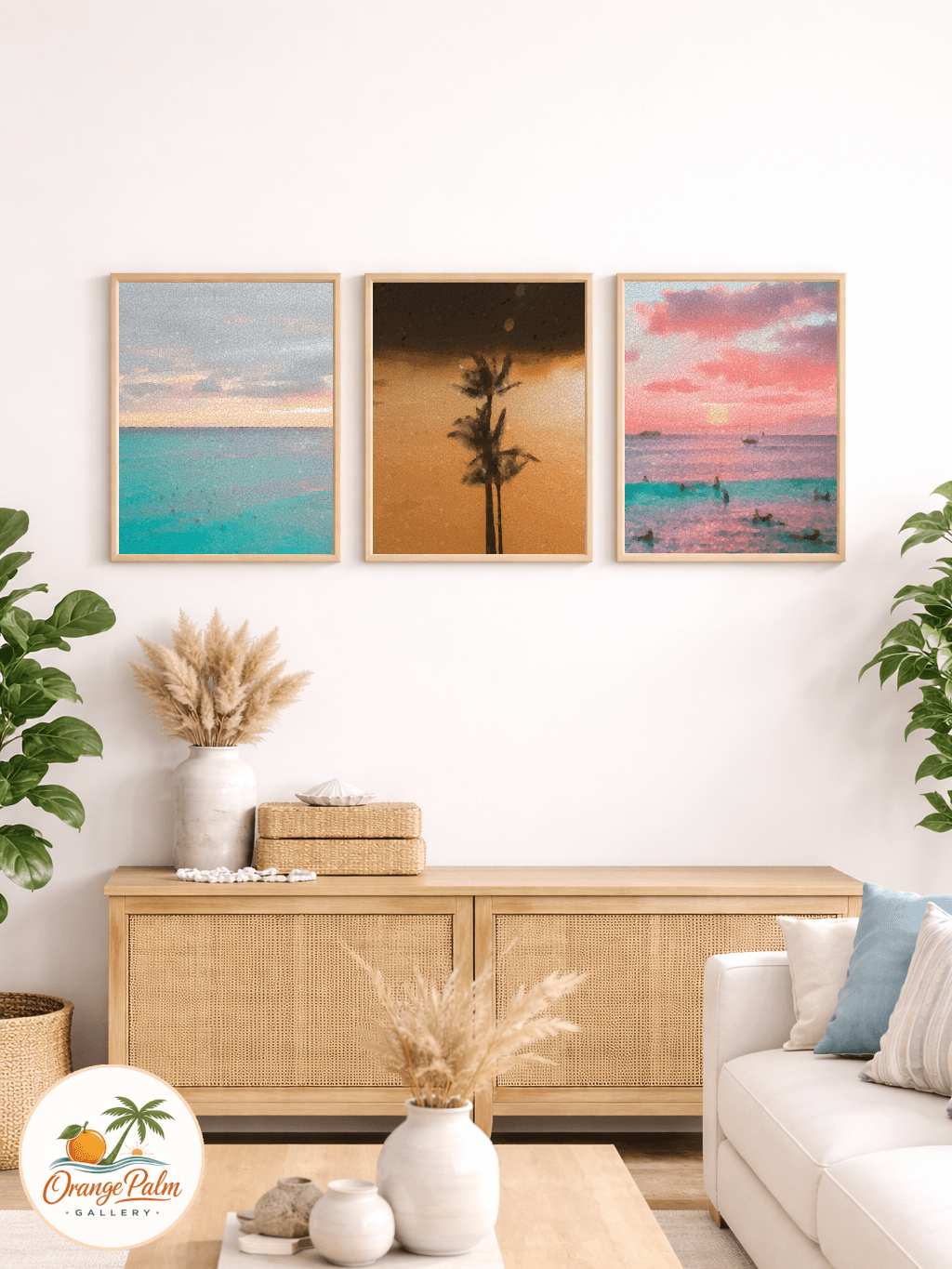
There is no need to force a full gallery wall if the room already has multiple functions. In open layouts, a gallery wall can work beautifully, but it asks for discipline: shared color, shared spacing, and a clear relationship to one area. Without that, it becomes decorative static.
One confident 2D piece is often stronger.
Not because minimalism is morally superior. Because the room is already doing a lot.
Repeat a color, not the whole idea
The easiest way to make open plan art feel intentional is to repeat one color somewhere else in the zone.
If the artwork has a muted coral note, let that color appear quietly in a book spine, small ceramic bowl, or textile stripe. If the print leans palm green, echo it with a plant, a cushion, or even the view outside a window. The repeat should be modest. You are not matching a set. You are creating a small visual rhyme.
What gets clumsy is repeating the motif too literally. Palm print on the wall, palm pillow, palm tray, palm rug. That turns a room into a checklist.
A better Florida room has restraint. Warm light. Natural textures. A little green. A little sand. A piece of art that feels handmade and placed with care.
The blank wall is part of the composition
Leaving a section of wall empty can feel unfinished at first. In an open plan room, it is often the thing that keeps the space from collapsing into visual noise.
Empty wall gives the artwork authority. It lets the dining area breathe. It lets the sitting area feel settled. It also makes the room easier to live in because not every surface is asking for attention.
That is the point people miss: wall art is not only about filling space. It is about editing attention.
If your open room feels scattered, do not start by buying more decor or planning a bigger arrangement. Start by choosing which zone deserves the artwork. Then place the piece so it belongs to the furniture, catches the natural light, and leaves the rest of the room alone.
That small decision can make an open room feel calmer without making it emptier.
For more warm, modern Florida inspired wall art and styling ideas, visit Orange Palm Gallery.