Florida Living
Plant Tags for a Sunroom That Actually Gets Used
A warm, practical journal note introducing a Florida-inspired printable plant care tag set for houseplants and sunroom shelves.
July 30, 2026 / 3 min read / Orange Palm Gallery Studio
Source note: this guide is written and maintained by Orange Palm Gallery Studio. Last updated August 4, 2026.
A lot of plant care advice assumes the plant owner is the problem. I think the corner is usually the problem.
A bright Florida room can look calm and still be a little unruly. One pot dries out fast by the glass. One palm sulks if it gets moved. One cutting is technically alive, but only because someone remembers its strange little routine every Thursday. The note gets written on a scrap, the scrap disappears, and the plant starts negotiating with the ceiling fan.
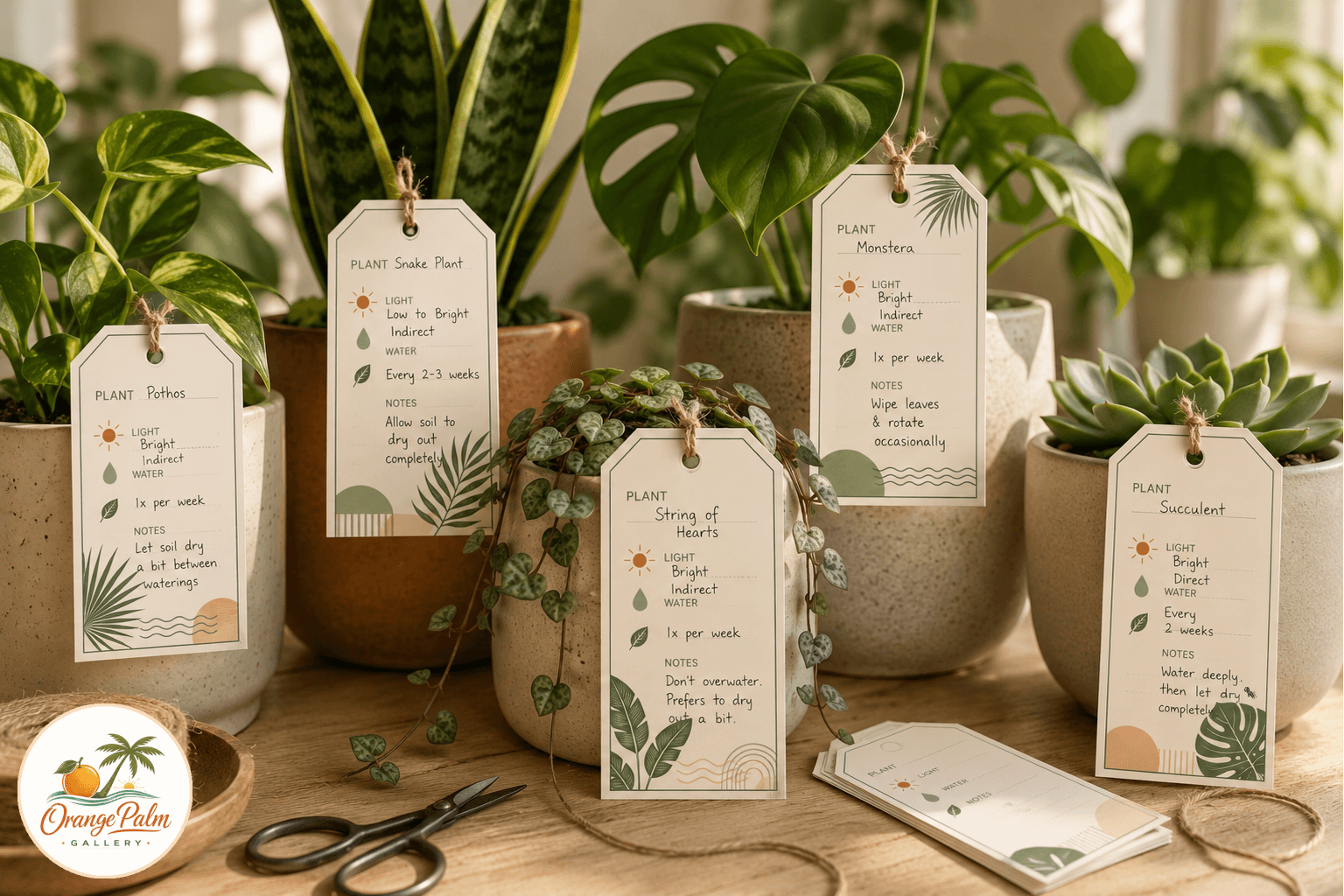
This printable plant care tag set is a small answer to that. Not a full binder. Not an app. Just quiet, useful tags for the plants that need a little memory attached to them.
Quick answer
Printable plant care tags work best in a Florida sunroom when each tag records the plant name, light preference, watering rhythm, and one real room-specific note. Use matte card stock for dry shelves, laminate tags near damp soil, and keep the design quiet enough to sit with pots, baskets, glass jars, and everyday plant clutter.
A small system for messy plant corners
The idea is simple: each tag gives you a place to write the plant name, light preference, watering rhythm, and one extra note that actually matters. That last line is the whole point. Real plant care is rarely just “water weekly.” It is more like “keep away from west window,” “likes the blue pot,” or “turn after watering because it leans like a tourist on vacation.”
The tradeoff is that a paper tag will never be as automatic as a phone reminder. Good. A tag sits with the plant. It keeps the information in the same visual field as the thing you are caring for. For a sunroom shelf, that feels more honest than another notification.
Why the tags stay quiet
I kept the design warm and restrained: palm green, warm white, small sun and water marks, soft coastal geometry. The tags are meant to be seen, but not to take over the shelf. That is where plant printables often go wrong. They turn into craft fair noise before they become useful.
A good plant tag should feel like part of the room. It should work near terracotta, ceramic, woven baskets, glass propagation jars, and the odd nursery pot you keep meaning to replace. Florida inspiration shows up here in the light and the shapes, not in a loud beach sign version of the state.
How I would print and use them
For everyday use, I would print these on matte card stock and trim them with a straight edge. If the tags will sit near damp soil or a misting bottle, laminate them or use a clear sleeve before writing with a marker. For gift plants, print a fresh sheet, fill one tag in by hand, and tuck it into the pot with a simple wooden pick or clip.
The set is designed for practical rooms: sunrooms, kitchens, covered lanai shelves, studio desks, and any corner where plants are part decor and part ongoing experiment. It is also useful when more than one person waters the plants, which is how many perfectly fine pothos meet their end.
The Florida note
Florida homes have a particular indoor plant problem. The light is generous, then harsh. The air can be damp, then cold from air conditioning. A plant can be thriving near one window and dramatic three feet away. These tags are a way to record those tiny local truths.
That is the part I like most. The tag is not pretending to be a universal plant manual. It is a small studio printable for the actual room you have, the actual light you get, and the actual plant that refuses to behave like the care label said it would.