Wall Art Styling
The Desk Wall Should Look Worked In, Not Staged
A studio note on choosing and placing calm Florida-inspired wall art behind a desk without turning the wall into a fake brand backdrop.
August 17, 2026 / 4 min read / Orange Palm Gallery Studio
Source note: this guide is written and maintained by Orange Palm Gallery Studio. Last updated August 17, 2026.
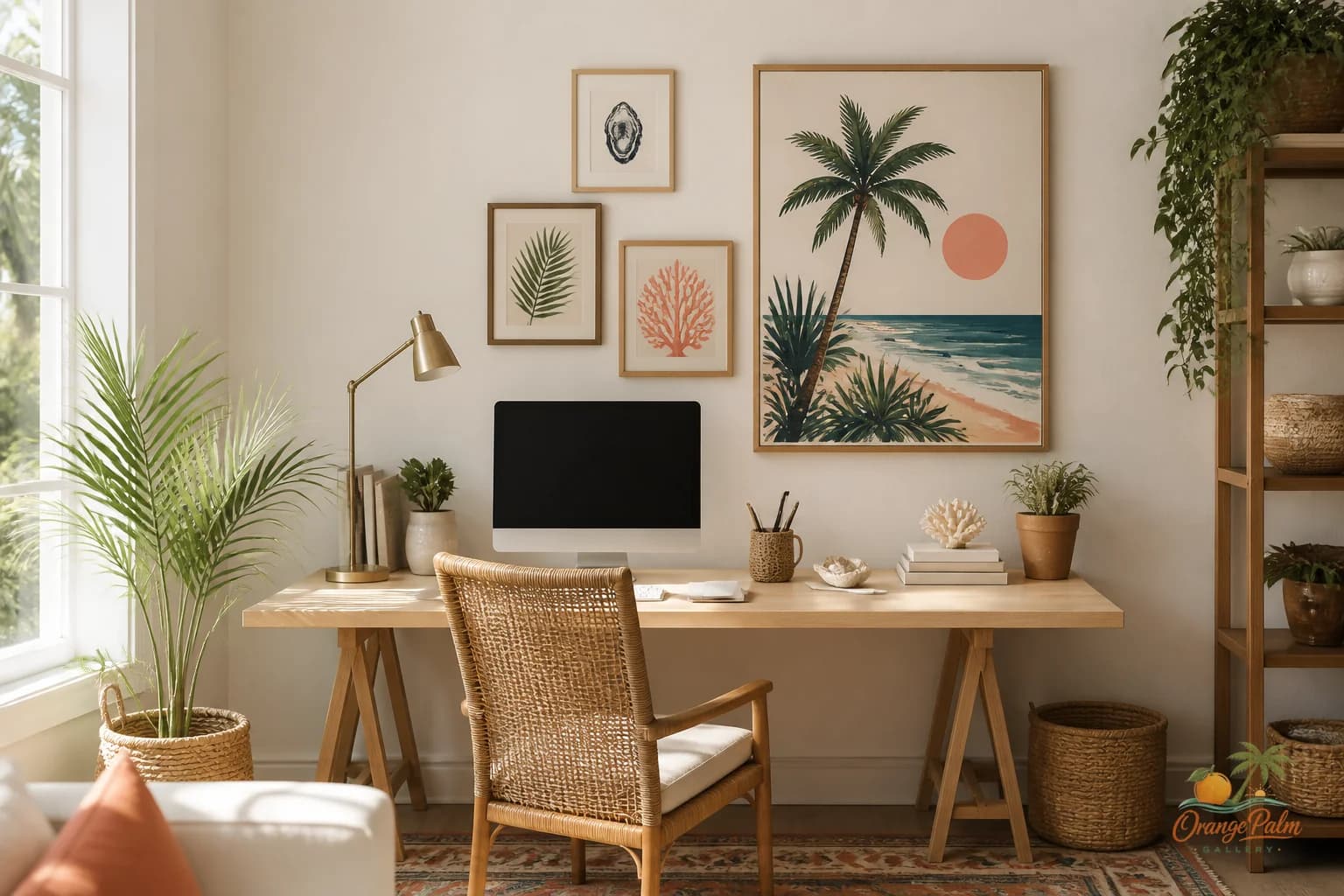
A desk wall has a strange job. It is a backdrop when the camera is on, a view when the screen is closed, and the edge of the work zone when the room still has to feel like home at night.
That is why so many desk walls go wrong. People either decorate them like a tiny personal brand billboard, or they leave them blank because it is just the office. Both choices make the room feel temporary. One is too performed. The other is too neglected.
For a Florida-inspired home office, the better move is quieter: place one piece of wall art where the room actually uses it.
Start from the chair, not the doorway
Most wall art gets centered from the standing position. That works in a hallway or entry. At a desk, it can be the wrong test.
Sit in the chair. Look at the wall the way you look at it during the day. Where does your eye land when the laptop is closed? What part of the wall shows above the monitor? What section appears on camera if you take calls?
That is the real composition.
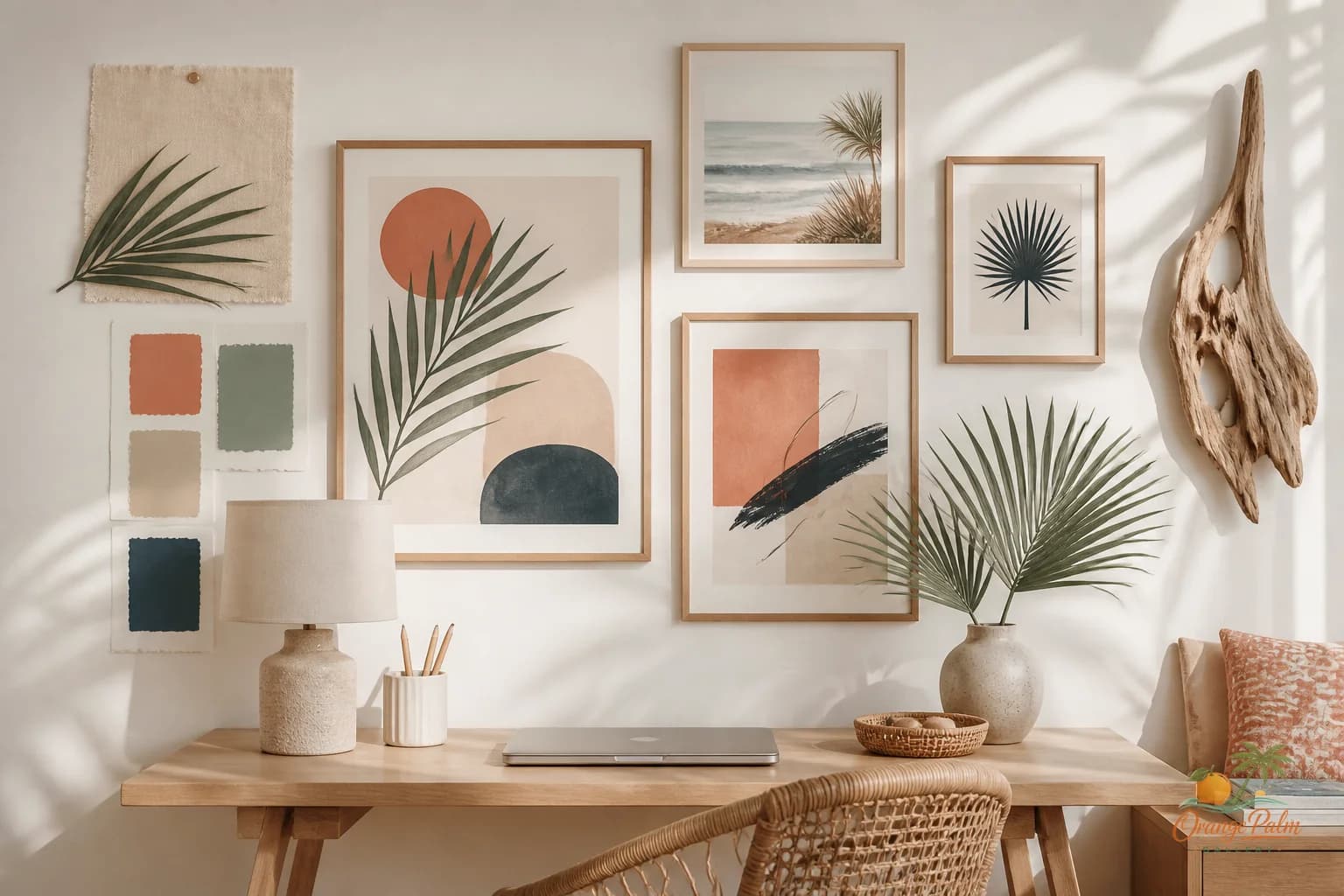
If the desk has a low laptop and a simple lamp, one calm piece can sit slightly above the screen line. If there is a large monitor, the art often works better offset to one side instead of stacked directly over the monitor. Centered art gives order, but offset art gives the tech some breathing room. In smaller offices, breathing room usually wins.
The mistake is treating the monitor, shelves, cords, task lamp, and wall art as separate decisions. Visually, they all become one cluster. The art has to hold its own without adding more noise.
Scale should calm the wall, not decorate every gap
A desk wall does not need a sprinkle of tiny prints around every open spot. That turns the area into a bulletin board, even when the prints are beautiful.
One medium wide piece usually feels more settled than three small pieces fighting the rectangles already on the desk. If the desk is simple, aim for art that relates to the width of the desk zone without matching it exactly. Around two thirds of the visual desk width is a useful starting point. If shelves or sconces flank the desk, go smaller and let the surrounding objects count as part of the composition.
Leave air between the top of the monitor and the bottom of the artwork. Stacking rectangle on rectangle with no pause makes the whole wall feel tense. A little blank wall is not wasted space. It is what lets the art read as art.
Use Florida color without turning the office into a theme room
A coastal office does not need turquoise everything. Florida color is richer than that. Think warm white walls, sand toned paper, palm green shadows, ink dark lines, and a little coral used with restraint.
The desk is a place where color stays in your field of vision for hours, so high contrast art can get tiring faster than it would in an entryway. A softer ground with one or two grounded accents is easier to live with. Palm green gives the wall weight. Sand and warm white keep it open. Coral can bring life, but it should feel like a small flash of late sun, not a warning light.
The reference does not have to scream beach. A shaded patio, shell limestone, palm shadow on stucco, or the flat heat of an afternoon sky can all feel Florida without becoming decorative costume.
Watch the camera view
If the desk is used for video calls, do the ten second camera check. Open the camera and look at where the art lands around your head and shoulders.
Art directly centered behind the head can look oddly staged. Art too low can look like it is growing out of the chair. A piece placed slightly to one side often feels more natural on camera and better in the room. The goal is not to build a perfect backdrop. The goal is to make the wall feel considered when life inevitably points a camera at it.
Avoid busy gallery clusters at face height unless the rest of the office is extremely spare. A call already has enough visual chatter: screen glow, chair shape, books, lamps, doorways, plants. The wall art should lower the volume.
Let the office still belong to the home
A home office wall should not feel like corporate filler. It also does not need a motivational quote shouting over your shoulder.
The best desk wall art gives the work zone an edge without making it hard. A calm 2D Florida-inspired piece can act almost like a visual exhale at the end of the day. It marks the desk as intentional, but it does not demand performance from the room.
That is the tradeoff worth naming: the desk wall needs enough presence to avoid looking forgotten, and enough restraint to avoid looking staged.
If you are building a quieter room around warm coastal color, clean wall placement, and artwork that behaves well with real furniture, you can explore more studio notes and pieces at Orange Palm Gallery.